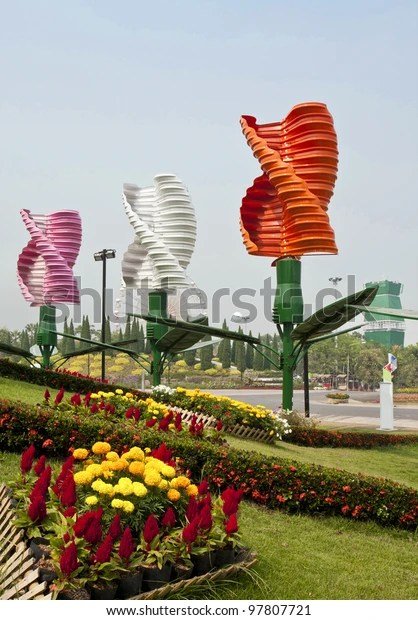
Imagine a world where wind power doesn't just mean colossal white turbines dominating distant horizons, but also sleek, quiet devices nestled into cityscapes, powering your streetlights, or keeping remote communities connected. This is the promise of Vertical Axis Wind Turbines (VAWTs), a distinct and often misunderstood player in the renewable energy landscape. While their horizontal-axis cousins (HAWTs) grab most of the headlines, VAWTs offer unique advantages that make them surprisingly effective solutions for specific, often challenging, energy needs. This guide will take you on a journey to understand VAWTs, exploring their mechanics, applications, challenges, and the exciting innovations shaping their future.
At a Glance: Key Takeaways on VAWTs
- Vertical Design: Unlike common HAWTs, VAWTs feature a rotor that spins around a vertical axis.
- Omnidirectional: They can capture wind from any direction, eliminating the need to reorient.
- Turbulence Friendly: VAWTs perform well in turbulent and lower wind speed conditions, making them ideal for urban areas.
- Lower Profile: With a lower center of gravity and quieter operation, they have less visual and noise impact.
- Two Main Types: Darrieus (lift-driven, efficient at higher speeds) and Savonius (drag-driven, excellent in low wind).
- Specific Niche: Best suited for small-scale, urban, remote, or hybrid energy systems, rather than large-scale wind farms.
- Evolving Technology: Ongoing innovations are improving efficiency, durability, and cost-effectiveness.
A Fresh Spin on Wind Power: What Exactly Are VAWTs?
When most people picture a wind turbine, they envision the majestic, propeller-like structures with blades spinning parallel to the ground – these are Horizontal Axis Wind Turbines (HAWTs). But VAWTs are different. Their defining characteristic is a rotor oriented vertically, perpendicular to the ground, spinning around an axis that runs from top to bottom. This fundamental design difference underpins all their unique advantages and challenges.
Think of it less like an airplane propeller and more like a revolving door or an old-fashioned eggbeater turned on its side. This simple shift in orientation unlocks a host of capabilities that HAWTs simply can't match, particularly in certain environments.
The Unconventional Advantages of Vertical Power
VAWTs are more than just an aesthetic alternative; they're engineered to thrive where HAWTs struggle. Here’s why their vertical design makes a real difference:
- Wind from Any Direction (Omnidirectional): Unlike HAWTs, which must constantly "yaw" or turn to face the wind, VAWTs are truly omnidirectional. They capture wind equally effectively from any angle, making them highly responsive to shifting wind patterns without complex machinery.
- Mastering Turbulent Air: Urban environments, building rooftops, and hilly terrain are notorious for producing highly turbulent, unpredictable winds. VAWTs, with their vertical design, are remarkably efficient even in these gusty, chaotic conditions where HAWTs would struggle or suffer increased wear and tear.
- Low Center of Gravity: The heaviest components – including the generator and gearbox – are typically located at the base of a VAWT. This low center of gravity enhances stability, reduces stress on the tower, and makes the turbine less susceptible to damage from high winds. It also simplifies maintenance access, as mechanics can work on the ground without scaling a tall tower.
- Reduced Noise and Visual Impact: VAWTs generally operate at lower tip speeds (the speed at which the blade tips move) compared to HAWTs, leading to significantly lower noise emissions. Their compact, often artistic designs also blend more discreetly into urban or residential landscapes, making them more publicly acceptable.
- Safer for Wildlife: The slower blade speeds and solid, often "wall-like" appearance of VAWTs present a lower risk to birds and bats compared to the faster-moving, more propeller-like blades of HAWTs.
A Brief Look Back: The Journey of VAWTs
While they might seem like a cutting-edge innovation, the concept of vertical axis wind turbines dates back further than many realize. Early forms of VAWTs, particularly drag-based designs, were used in ancient Persia for milling grain and pumping water over a millennium ago.
The modern resurgence of VAWTs began in the late 19th and early 20th centuries, with significant interest rekindled in the latter half of the 20th century as global environmental awareness grew and the search for diverse renewable energy solutions intensified. Engineers and innovators started exploring more sophisticated aerodynamic designs, laying the groundwork for the types of VAWTs we see today. This ongoing journey highlights a continuous effort to harness wind power in more versatile and integrated ways.
Understanding the Core Designs: Darrieus vs. Savonius
The world of VAWTs isn't monolithic; it's characterized by several distinct designs, each with its own operational principles and optimal applications. The two most prominent types are the Darrieus and Savonius turbines.
1. The Graceful Darrieus Turbine: Harnessing Lift
Picture a giant eggbeater or a series of gracefully curved blades extending from a central vertical shaft. That's a Darrieus turbine. Named after its French inventor Georges Jean Marie Darrieus, these turbines operate primarily on the principle of aerodynamic lift, much like an airplane wing. As the wind flows over their airfoil-shaped blades, it creates a pressure differential that "lifts" the blade forward, causing the rotor to spin.
Key Characteristics:
- Shape: Typically feature two or three slender, curved blades, often resembling a parabolic or troposkien shape. Other variations, like the H-rotor (straight blades in an 'H' configuration) or Giromill, also fall under the lift-driven category.
- Efficiency: Generally more efficient than Savonius turbines, especially at higher wind speeds. They can achieve efficiencies ranging from 20-40%, making them competitive in certain scenarios.
- Operation: Requires an external boost to start spinning (self-starting is a challenge at low wind speeds) but performs very well once up to speed.
- Complexity: More complex to manufacture and maintain due to the precise airfoil shape required for the blades.
- Applications: Ideal for sites with consistent, moderate-to-high wind speeds. They're often explored for larger VAWT installations.
2. The Robust Savonius Turbine: Relying on Drag
In contrast to the sleek Darrieus, the Savonius turbine has a simpler, more robust appearance, often resembling a cut-open barrel or two scoops (like a cut-in-half oil drum) facing opposite directions. Invented by Finnish engineer Sigurd J. Savonius, these turbines operate on the principle of aerodynamic drag. The wind pushes on the concave (open) side of the blade, creating more drag than on the convex (closed) side, which results in rotational force.
Key Characteristics:
- Shape: Usually consists of two or more scoop-shaped blades that catch the wind. Helical variations (where the scoops are twisted) are also common, improving smoothness and efficiency.
- Efficiency: While excellent at capturing energy from low winds, their overall energy conversion efficiency is lower than Darrieus turbines, typically in the range of 15-25%.
- Operation: Self-starting even in very light winds, which is a significant advantage. This makes them highly reliable for applications where continuous power generation is critical.
- Simplicity: Simpler design makes them easier and cheaper to manufacture, install, and maintain.
- Applications: Excels in low-wind conditions and applications requiring reliable, albeit lower, power output. They are often chosen for small-scale, remote, and urban deployments.
While Darrieus and Savonius are the most common, other hybrid designs like the Giromill (straight vertical blades that pivot) and advanced Helical designs (often a twisted Savonius or Darrieus) continuously push the boundaries of VAWT performance, aiming to combine the best features of both lift and drag principles.
The Unseen Hurdles: Challenges and Limitations of VAWTs
Despite their distinct advantages, VAWTs are not without their complexities. Understanding these challenges is crucial for a realistic assessment of their role in the energy transition.
The Efficiency Gap
One of the most frequently cited limitations of VAWTs is their generally lower energy conversion efficiency compared to HAWTs. While HAWTs can achieve efficiencies of 40-50% (and even higher in ideal conditions), VAWTs typically range from 20-40%. This efficiency gap stems from a few factors:
- Aerodynamic Drag: For VAWTs, especially Darrieus types, blades moving against the wind on one side of their rotation experience drag that can reduce overall effectiveness. This creates a parasitic loss that HAWTs, with their always-forward-facing blades, largely avoid.
- Turbulence at Lower Heights: VAWTs are often installed closer to the ground, typically 5-10 meters high, where wind speeds are naturally lower and more turbulent due to ground friction and obstructions. In contrast, HAWTs are usually placed at 80-120 meters or even higher, tapping into faster, more consistent winds. This height difference significantly impacts the sheer volume of wind energy available for capture.
Mechanical Stresses and Vibrations
Operating in turbulent, ground-level winds can impose considerable mechanical stress on VAWT components. These fluctuating forces can lead to:
- Vibration Issues: The rapid changes in wind direction and speed at lower altitudes can induce vibrations in the turbine structure, potentially shortening the lifespan of bearings, blades, and the central shaft.
- Increased Maintenance Needs: While access to components at the base of a VAWT is easier, the harsher operating conditions might necessitate more frequent inspection and maintenance of these critical parts to ensure long-term reliability. This is a trade-off: easier access but potentially more frequent intervention.
These challenges highlight that while VAWTs excel in specific niches, they are not a universal replacement for HAWTs, but rather a complementary technology addressing different needs.
Where VAWTs Shine Brightest: Ideal Applications
The unique attributes of VAWTs—their omnidirectional nature, lower noise, minimal visual impact, and ability to operate in turbulent winds—make them particularly well-suited for a variety of specialized applications where traditional HAWTs wouldn't be feasible.
1. Urban Environments: Powering the Concrete Jungle
Cities are often windy, but the wind is unpredictable, swirling around buildings and creating turbulent eddies. This is where VAWTs truly thrive. Their ability to capture wind from any direction and perform in turbulent conditions makes them ideal for:
- Rooftop Installations: Discreetly placed on commercial or residential buildings, they can contribute to a building's energy independence without extensive structural reinforcement or visual obstruction.
- Integrated into Infrastructure: Imagine vertical axis wind power generator systems integrated into streetlights, bus stops, or even directly onto architectural features. The "Storm Shelter" bus stops in Reykjavik, powered by VAWTs, are a prime example of this innovative urban integration.
- Small-Scale Urban Power: Supplementing grid power for specific civic amenities, reducing reliance on fossil fuels in densely populated areas.
2. Small-Scale & Decentralized Power: Off the Beaten Path
For individual homes, small businesses, or localized infrastructure, VAWTs offer a practical and often quieter solution for generating electricity.
- Street Lighting and Signage: Many modern smart streetlights and roadside signs incorporate small VAWTs to become self-sufficient, requiring no trenching for power lines.
- Water Pumping: In agricultural or remote settings, VAWTs can power water pumps for irrigation or livestock, especially where a constant, low-level energy supply is sufficient.
- Off-Grid Homes: For cabins, tiny houses, or remote properties not connected to the main grid, VAWTs provide a sustainable and quiet source of electricity.
- Farm Monitoring Equipment: Powering sensors, cameras, and communication devices for smart farming solutions in expansive rural landscapes.
3. Remote and Off-Grid Locations: Bridging the Energy Gap
In areas where grid extension is impractical, too costly, or simply unavailable, VAWTs can deliver crucial power.
- Telecommunications Towers: Providing reliable power for mobile phone masts and internet repeaters in distant regions, ensuring connectivity where it's needed most.
- Medical Clinics: Powering essential equipment and lighting in rural medical facilities, particularly in developing countries like those in rural Africa and India.
- Monitoring Stations: From environmental sensors in wilderness areas to meteorological stations in harsh climates, VAWTs offer a robust power solution.
4. Hybrid Renewable Energy Systems: The Best of Both Worlds
VAWTs are rarely deployed as standalone solutions for large-scale energy needs. Instead, they often find their greatest value when combined with other renewable energy sources.
- Solar-Wind Hybrids: Pairing VAWTs with solar panels creates a resilient energy system. When the sun isn't shining, the wind often blows, and vice-versa, ensuring a more consistent power supply. This synergy is particularly useful in remote applications or for enhancing grid reliability.
5. Offshore Applications: A Promising Frontier
The ocean presents a challenging but incredibly resource-rich environment for wind energy. VAWTs, with their inherent stability and low center of gravity, are gaining attention for potential offshore deployments.
- Stability in Harsh Conditions: Their design makes them more stable against strong winds and wave action, potentially reducing the engineering complexity and cost of offshore platforms compared to HAWTs.
- Reduced Maintenance Logistics: With the generator and other critical components at the base, maintenance access could be simplified, reducing the need for complex and costly offshore service operations.
- Lower Visual Impact: While still sizable, their different aesthetic might be more palatable in certain coastal regions.
VAWTs vs. HAWTs: A Head-to-Head Comparison
To truly appreciate the role of Vertical Axis Wind Turbines, it's essential to understand how they stack up against their more common Horizontal Axis counterparts. Both have their strengths, and neither is inherently "better" – rather, they are suited for different jobs.
| Feature | Vertical Axis Wind Turbines (VAWTs) | Horizontal Axis Wind Turbines (HAWTs) |
|---|---|---|
| Rotor Orientation | Vertical (perpendicular to the ground) | Horizontal (parallel to the ground) |
| Generator Placement | Typically at the base of the tower | At the top of the tower (nacelle) |
| Wind Direction | Omnidirectional; captures wind from any direction without reorientation | Requires yawing (turning) to face the wind; directional |
| Start-up Wind Speed | Often lower (especially Savonius types); can self-start in light winds | Generally higher; requires sufficient wind to overcome inertia |
| Efficiency (Typical) | 20-40% | 40-50% (higher in ideal conditions) |
| Installation Height | Lower (5-10 meters) | Higher (80-120 meters, reaching stronger, more consistent winds) |
| Turbulence Handling | Excellent; performs well in turbulent and gusty conditions | Less efficient in turbulent conditions; better in steady, laminar flow |
| Noise Impact | Lower; slower blade tip speeds | Higher; faster blade tip speeds can create more audible whooshing |
| Visual Impact | Generally lower; compact designs, blend into urban/residential areas | Higher; prominent, propeller-like structures dominating landscapes |
| Maintenance Access | Easier; components at ground level | More complex; requires cranes or service lifts to access components at height |
| Wildlife Impact | Lower risk to birds and bats due to slower blades and different visual profile | Higher risk, particularly for birds and bats, due to fast-moving blades |
| Best Use Cases | Urban, small-scale, remote, turbulent wind sites, hybrid systems | Large-scale wind farms, utility-scale power generation, steady wind regions |
| Capacity Factor | 15-20% | 30-45% |
| This comparison clearly shows that while HAWTs dominate large-scale electricity production, VAWTs carved out a vital niche where their unique characteristics provide superior advantages. They are not in direct competition but rather complement each other in the broader renewable energy ecosystem. |
Innovating for Tomorrow: The Future of Vertical Axis Wind Turbines
The journey of VAWTs is far from over. Significant research and development efforts are underway globally, pushing the boundaries of their performance, reliability, and cost-effectiveness. The future of VAWTs looks promising, driven by advancements across several key areas:
1. Aerodynamic Structures: Smarter Blades, Better Flow
Engineers are constantly refining blade designs and configurations to enhance efficiency and reduce drag.
- Helical Blade Designs: By twisting the blades, like a helix, these designs can reduce pulsating torque, improve self-starting capabilities, and operate more smoothly across a wider range of wind speeds.
- Advanced Airfoil Shapes: Borrowing from aerospace engineering, new airfoil designs are being developed to optimize lift generation and minimize drag, leading to higher energy capture rates.
- Counter-Rotating Systems: Some innovative designs explore multiple rotors spinning in opposite directions on the same axis. This concept aims to capture more wind energy, improve stability, and potentially increase overall efficiency.
2. Smart Turbine Technology: The Rise of IoT and AI
Integration with cutting-edge digital technologies is transforming how VAWTs are monitored, managed, and maintained.
- IoT for Real-time Monitoring: Sensors embedded throughout the turbine can collect vast amounts of data on wind speed, vibration, temperature, and performance. This data is transmitted in real time, allowing for immediate adjustments and proactive fault detection.
- Predictive Maintenance: Leveraging AI and machine learning, this data can be analyzed to predict potential component failures before they occur. This shifts maintenance from reactive fixes to planned interventions, significantly reducing downtime and operational costs.
- Adaptive Control Systems: Smart VAWTs can dynamically adjust their operational parameters (e.g., rotor speed) based on real-time wind conditions, optimizing energy output and extending component lifespan.
3. Modular Design and Advanced Materials: Easier, Lighter, Stronger
Innovations in manufacturing and materials science are making VAWTs more robust, lighter, and simpler to deploy.
- Modular Construction: Designing turbines in smaller, standardized modules simplifies transportation, installation, and replacement of parts. This is especially beneficial for remote locations or urban environments with limited access.
- Lightweight, Durable Materials: The use of advanced composites, such as carbon fiber and fiberglass, improves blade durability, reduces overall turbine weight, and enhances performance by minimizing inertia. These materials are also more resistant to corrosion, critical for offshore and coastal applications.
4. Supporting the Ecosystem: Research, Policy, and Public Awareness
For VAWTs to truly flourish, a supportive ecosystem is essential.
- Increased Investment in Research: Continued funding for R&D is crucial to overcome current limitations, especially in efficiency and cost reduction.
- Supportive Policies and Incentives: Government policies, including feed-in tariffs, tax credits, and clear regulatory frameworks, can accelerate the adoption of VAWTs, particularly in niche markets.
- Public Education and Awareness: Increasing public understanding of VAWTs' benefits, especially their suitability for urban integration and lower environmental impact, is key to gaining broader acceptance and demand.
The future envisions VAWTs not just as an alternative, but as a critical component of a diversified, resilient, and localized renewable energy infrastructure.
Debunking Myths & Answering Common Questions
Let's address some common misconceptions and questions about VAWTs head-on.
Q: Are VAWTs really less efficient than HAWTs, or is that a myth?
A: It's not a myth. Generally, VAWTs do have lower energy conversion efficiencies (20-40%) compared to HAWTs (40-50%). However, this isn't the whole story. VAWTs operate in different conditions (lower heights, turbulent wind) where HAWTs wouldn't perform well or would incur significant wear. So, while their peak efficiency might be lower, their effective efficiency in their niche applications can be very competitive.
Q: Do VAWTs last as long as HAWTs?
A: With proper design and maintenance, VAWTs can have a comparable lifespan to HAWTs. However, their operation in often more turbulent, ground-level winds can put different kinds of stress on components. Innovations in materials and smart monitoring aim to enhance their durability and predict maintenance needs more effectively.
Q: Are VAWTs completely silent?
A: No, but they are significantly quieter than most HAWTs. The noise profile of a VAWT is typically a gentle whirring rather than the distinct 'whoosh' of HAWT blades, making them much more acceptable in residential and urban areas.
Q: Can I replace my rooftop solar panels with a VAWT?
A: Not necessarily a direct replacement. VAWTs and solar panels are often best used together in hybrid systems. Solar works when the sun shines, wind when the wind blows. Combining them provides a more consistent and reliable energy supply throughout the day and year, complementing each other rather than competing.
Choosing Your Wind Path: Is a VAWT Right for You?
Deciding whether a VAWT is the right renewable energy solution depends heavily on your specific needs, location, and priorities. Here’s a quick guide to help you assess:
- Consider Your Location: Do you live in an urban area, a suburban property with obstructions, or a remote, off-grid site? If you have highly turbulent wind, limited space, or concerns about noise and visual impact, a VAWT could be an excellent fit.
- Evaluate Your Energy Needs: Are you looking to power a single street light, supplement a small home's electricity, or ensure continuous power for a critical remote device? VAWTs excel in these smaller, localized applications. For large-scale industrial power, HAWTs are generally more suitable.
- Assess Wind Conditions: While VAWTs handle turbulence well, they still need some wind. Sites with consistent, even if moderate, wind speeds will yield better results. Consider a site assessment.
- Budget and Maintenance: While simpler in design, the overall cost-effectiveness should be weighed against potential maintenance needs. The ease of ground-level access for VAWTs can be a significant cost-saver in the long run.
- Environmental and Aesthetic Priorities: If minimizing visual impact, reducing noise, and posing less risk to local wildlife are high on your list, VAWTs offer compelling advantages.
Ultimately, VAWTs are not a silver bullet for all wind power needs, but their unique characteristics make them invaluable for specific applications where they can outperform traditional turbines.
Beyond the Blades: The Broader Impact of VAWTs
As we look towards a future powered by diverse and sustainable energy sources, Vertical Axis Wind Turbines stand ready to play an increasingly important role. They represent more than just an engineering alternative; they embody a shift towards more integrated, localized, and environmentally harmonious energy production.
By harnessing wind in places previously deemed unsuitable, VAWTs empower urban centers, connect remote communities, and offer a quieter, more visually appealing pathway to a greener future. Their ongoing evolution, driven by smart technology and advanced materials, promises a future where wind power is not just about scale, but also about intelligent integration and accessibility for everyone. As awareness grows and technology matures, VAWTs will continue to reshape our understanding of what wind energy can truly achieve, spinning a cleaner, brighter future, one vertical rotation at a time.