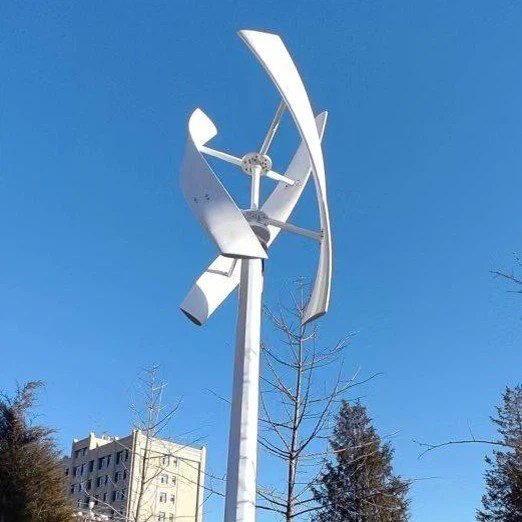
Imagine a future where your home's energy comes from an unseen, quiet force, gently spinning above your roof, boat, or garden. This isn't a distant dream, but a practical reality thanks to Vertical Axis Wind Power Generators (VAWTs). These innovative turbines are rapidly becoming the go-to solution for homeowners, off-grid adventurers, and small businesses seeking sustainable, reliable, and unobtrusive power. Designed to harness wind energy efficiently and quietly, VAWTs offer a compelling alternative to traditional energy sources, delivering peace of mind along with clean electricity.
What Makes Vertical Axis Wind Generators So Appealing?
Vertical Axis Wind Turbines stand apart with their unique design, where blades rotate around a vertical shaft, unlike their more common horizontal counterparts. This fundamental difference grants them several distinct advantages, making them incredibly versatile and user-friendly. They don't require constant adjustment to face the wind, working effectively from all directions – a game-changer for fluctuating wind conditions. If you're curious about the foundational principles and varied types of these ingenious machines, an Introduction to Vertical Axis Wind will set the stage perfectly.
Beyond the Blades: Unpacking VAWT Advantages
One of the most significant benefits of VAWTs, particularly for residential use, is their remarkably quiet operation. Unlike many traditional wind turbines that can produce considerable noise, VAWTs typically operate well below 62 decibels, making them a discreet addition to any property. Furthermore, their design allows them to start generating power at surprisingly low wind speeds, ensuring consistent energy production even on calmer days. This efficiency, combined with their ability to capture wind from any direction without mechanical reorientation, presents a powerful case for their adoption. For a deeper dive into how VAWTs stack up against other options and their specific strengths and weaknesses, explore our guide on VAWT Advantages, Disadvantages, and Comparison.
Powering Your World: Diverse Applications for VAWTs
The adaptability of Vertical Axis Wind Power Generators means they're suitable for a vast array of applications, extending far beyond typical home use. They are ideal for residential settings, providing supplemental power or even powering entire off-grid homes. Marine enthusiasts fit them on boats and yachts to keep batteries charged, while RV owners appreciate their compact design and steady output on the road. Farmers, remote cabins, small businesses, and even street lighting projects can all benefit from the consistent, multi-directional wind capture VAWTs offer. To truly grasp the breadth of possibilities, we encourage you to Explore VAWT use cases for inspiration and practical ideas.
The Science of Silent Power: Understanding VAWT Design
At the heart of every efficient VAWT lies clever engineering and thoughtful material selection. Modern VAWTs often feature aerodynamic blade designs, from helical spirals to sleek arcs, crafted from durable materials like aluminum alloy, treated composites, or robust nylon fiber. These materials resist corrosion and withstand harsh weather, ensuring long-term reliability. Advanced permanent magnet generators, sometimes enhanced with special stators to reduce torque resistance or even magnetic levitation technology, are crucial for converting wind energy into usable electricity with minimal friction and noise. If you're eager to dissect the intricate mechanisms that make these turbines so effective and quiet, you can Explore VAWT design insights Master VAWT.
Choosing Your Ideal Vertical Axis Wind Generator: A Comprehensive Guide
Selecting the right VAWT for your needs involves evaluating several key factors to ensure optimal performance and long-term satisfaction.
Matching Power to Your Needs
The first step is determining your required power output. VAWTs range from compact 100W units perfect for small supplementary needs to powerful 10000W systems capable of supporting substantial energy demands. Your choice of system voltage (e.g., 12V, 24V, 48V) must also align with your existing electrical setup or battery bank for seamless integration.
Performance in Every Breeze
Look for a turbine with a low starting wind speed, ideally below 3 m/s (or 8.2 ft/s). This ensures that your generator begins producing electricity even in light winds, maximizing your energy harvest. While VAWTs are inherently wind-direction adaptable, some models offer additional automatic direction adjustment for optimized performance.
Built to Last, Designed for Quiet
Durability is paramount. Opt for blades made from robust, weather-resistant materials like aluminum alloy, alloy steel, or high-quality nylon fiber. Pay attention to noise ratings; for residential areas, selecting models with noise levels below 62 decibels is crucial for maintaining a peaceful environment. Features like quiet double bearings contribute significantly to reducing operational sound.
Safety and Smart Control
Essential safety features include automatic braking systems, often activated at a specific RPM (e.g., 300 RPM) to prevent damage during high winds. The type of controller is also vital; MPPT (Maximum Power Point Tracking) or electromagnetic controllers are preferred for efficiently regulating voltage and current, thereby optimizing power output and protecting your batteries.
Spotlight on Leading VAWT Models
The market offers a fantastic range of VAWTs, each designed with specific applications and power needs in mind:
- For Entry-Level & Compact Needs:
- The sjcdicnj 100W (24V) is an excellent choice for basic needs, featuring a durable nylon fiber construction, IP67 water resistance, and an electromagnetic braking system. It starts generating power at just 8.2 ft/s.
- The IOENC 500W and CRYBY 500W models offer quiet operation (<62dB) and low starting wind speeds, perfect for small homes or RVs. The CRYBY's spiral blade design is even rated to withstand typhoon-level winds.
- The PIAOCAIYIN 600W provides a strong output with five blades and an electromagnetic controller for automatic wind angle adjustment, designed for low vibration and extreme environments.
- For Mid-to-High Capacity Homes & Businesses:
- The HENGJINGTR 1000W-5000W series offers flexible voltage options (12V-220V) and a 360-degree wind capture design, ideal for more substantial energy requirements.
- A 3000W High-Capacity Kit with a 48V system is a robust option for heavier demands, featuring aerodynamic aluminum alloy blades and quiet double bearings.
- For Cutting-Edge, High-Power Demands:
- The HYZHANHONG 10000W stands out with magnetic levitation technology for superior efficiency and quieter operation, available in 12V, 24V, and 48V options for truly independent power.
From Box to Breeze: Installation, Maintenance, and Longevity
While many VAWTs are designed for relatively straightforward installation, understanding the specific requirements for your chosen model and location is crucial. Proper mounting, whether on a rooftop, pole, or boat, ensures safety and maximizes energy capture. Regular, minimal maintenance, such as checking connections and ensuring blades are free of debris, will keep your turbine operating efficiently for years to come. Investing in a durable product with a good warranty and following best practices for setup and care are key to realizing the full potential of your wind generator. For detailed guidance on getting your turbine up and running safely and keeping it in top condition, refer to our essential guide on VAWT installation, maintenance, safety.
Embrace the Future of Sustainable Energy
Vertical Axis Wind Power Generators are more than just an energy solution; they represent a step towards a quieter, more sustainable future. With their ability to harness wind efficiently from any direction, operate silently, and adapt to diverse environments, VAWTs offer a compelling pathway to energy independence for homes, businesses, and adventurers alike. Explore the possibilities and discover how a VAWT can transform your energy landscape.